Quiz: Logo game
- 4.5
- Rating
- 10.00M
- Installs
- Free
- Price
 Analysis by App-foxy
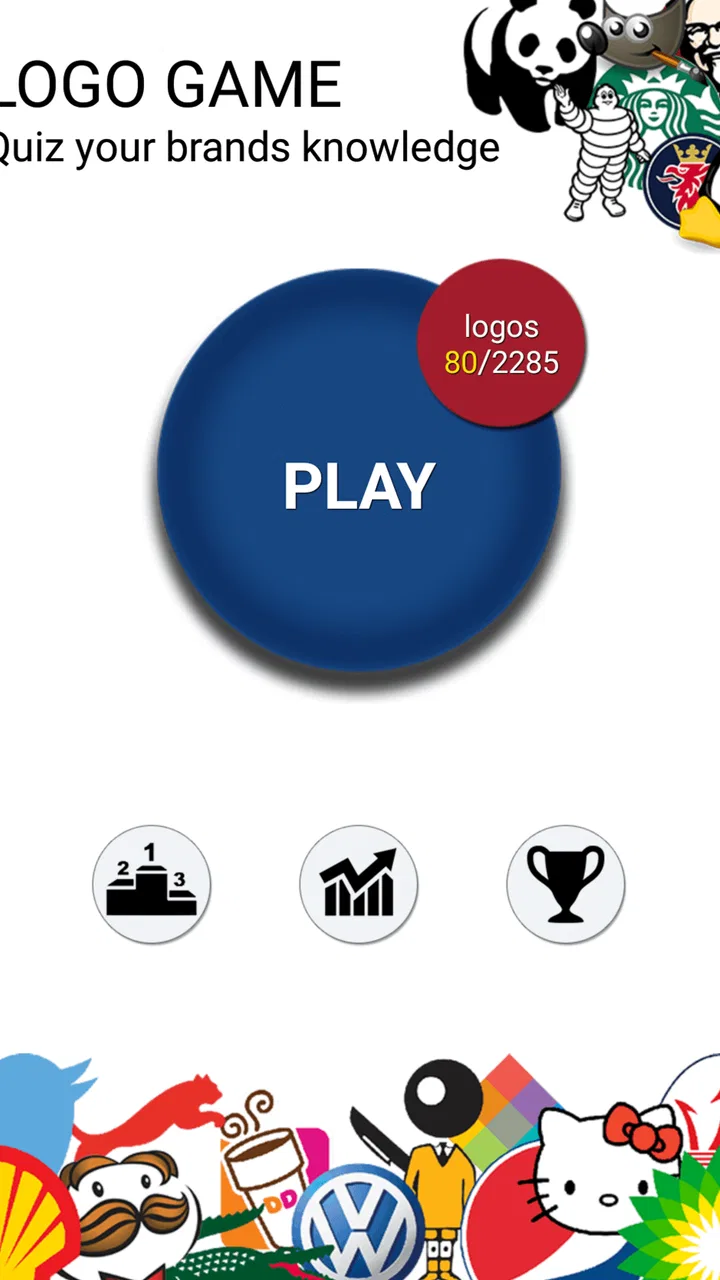
I like trivia games that let me start playing immediately, and Quiz: Logo game fits that mood well. It is a free logo-recognition game from Lemmings at work, built around identifying brands from visual clues rather than answering long general-knowledge questions. The idea is easy to understand, but the difficulty changes quickly once the familiar logos disappear and I have to rely on small details such as color, lettering, shape, or the part of a symbol that remains visible.
That simple format makes it a comfortable choice for a first-time player. I do not need to learn a complicated control system or prepare for a long session. I can open it, look at a logo, enter an answer, and move on. At the same time, it has enough variety to become a genuine test of visual memory, especially because it covers brands from different parts of the world rather than staying with only the names I see every day.
The game sits in the trivia category, carries an Everyone age rating, and is available at no cost. Its average rating is 4.5 from around 438 thousand ratings, while the wider audience has taken it beyond 10 million installs. Those figures suggest that it has found a broad audience, but they do not replace personal fit: people who enjoy recognition puzzles will probably settle in quickly, while players looking for action, story, or detailed explanations may find the format too narrow.
You May Also Like

 AccuWeather: Weather Radar
AccuWeather Review: A Quick, Clear Forecast for Everyday Decisions
For everyday plans, the best forecast is the one you can understand quickly. AccuWeather makes rain timing, radar, and local conditions easy to act on, with a few trade-offs.

 Hill Climb Racing
Why Hill Climb Racing Still Turns Crashes Into One More Run
A tiny car, a bumpy hill and one more upgrade: Hill Climb Racing keeps resurfacing because its simple chaos makes every near-miss feel personal.

 AliExpress - Shopping App
AliExpress Makes Global Shopping Feel Personal, but Shoppers Bear the Risk
AliExpress turns a global marketplace into a pocket-sized discovery engine. Its reach is useful, its shopping loop compelling, and its trade-offs easy to miss.

 Lords Mobile: Kingdom Wars
Lords Mobile Is a Kingdom-Building Routine, Not a Quick Match
A case-by-case verdict on the building, battles, device demands, and social commitments that make Lords Mobile rewarding for some players and exhausting for others.

 PDF Scanner app - TapScanner
TapScanner Makes Paperwork Easier to Capture, Check, and Share
TapScanner makes scanning with a phone feel less like a rescue operation and more like a dependable step in getting work done. Its capture tools are useful, though not flawless.

 Block Blast!
 Shows How Much a Puzzle Game Can Leave Out
A quiet grid game shows why puzzle players increasingly value instant clarity, repeatable skill and low-pressure play—and where the genre still needs to catch up.
More From Our News Desk
View All News


Getting comfortable with the logo quiz
I find it easiest to enjoy this game when I treat each logo as a small observation puzzle, not a test I need to rush through. In this section, I’ll focus on how to settle into that rhythm and make a first answer feel manageable; after that, the next section looks at what to expect when the familiar brands give way to less obvious ones.
What the first session feels like
My first useful expectation would be to treat this as a game of recognition, not a lesson about companies. The satisfaction comes from the moment a partly familiar image suddenly becomes obvious. Some answers arrive instantly because the colors and overall design are strongly associated with a brand. Others take longer, and that delay is where the game becomes more interesting. I may know the logo but struggle to recall the exact spelling, or recognize the symbol without remembering the company name used in the answer.
The store summary points to more than 800 American brands, special American levels, and 2,625 brands worldwide. In practical terms, that makes the game more than a small collection of local household names. A player in the United States may move comfortably through recognizable domestic brands, while someone elsewhere may discover that international sections expose gaps in their everyday brand awareness. That difference is useful: it keeps the experience from becoming a short memory test that ends as soon as the obvious logos are gone.
I also appreciate that the premise works for mixed groups. A friend who follows technology may identify a logo that I miss, while I may recognize a food or clothing brand that is invisible to them. Passing the phone around can turn a quiet solo game into a casual conversation, although the experience remains primarily about solving one logo at a time rather than competing through a complex multiplayer system.
Preparing for the first meaningful success
There is no need to overthink the opening. I would begin by looking at the complete visual impression before focusing on individual marks. Is the image dominated by a familiar color? Does the shape suggest a vehicle, a retailer, a sports brand, or a digital service? This broad classification is more reliable than guessing immediately from one letter or one curve.
A useful habit is to separate recognition from spelling. When I think I know an answer, I mentally say the brand name slowly and check whether I am remembering the public name or a related company. Logo games often make this distinction important: a symbol can point toward a product, a parent brand, or a short name, and rushing can lead me to type the wrong version even when the visual clue is familiar.
For a relaxed first session, I would not try to clear a large run of levels in one sitting. A short sequence gives me time to notice how the game presents its clues and how strict the answer entry feels. It also prevents the early, easy logos from creating a false impression that every later answer will be immediate. The best way to enjoy this kind of game is to accept that recognition comes in waves.
The first successful action matters
The first real win is not simply tapping an answer. It is learning how to turn a vague visual memory into a confident response. I usually start with the strongest clue, then test it against the rest of the image. If the colors suggest one brand but the lettering style points somewhere else, I pause rather than forcing the first thought. That small check reduces careless guesses and makes each correct answer feel earned.
When I am unsure, I use a three-step approach. First, I describe the image in plain language without naming a brand. Second, I recall where I have seen something similar in everyday life. Third, I compare possible names by spelling and by the kind of business they represent. This is especially helpful with logos that share common colors or simple geometric shapes.
A realistic example is playing during a short break while waiting for a coffee or a bus. I might solve several familiar logos quickly, then reach one that looks almost known. Instead of treating the pause as failure, I use it as a memory prompt: where have I seen this mark, on packaging, a screen, a sign, or clothing? That change in approach is often enough to produce the first meaningful breakthrough without turning the session into a frustrating search.
Where new players can become confused
The biggest source of confusion is assuming that recognition alone guarantees the accepted answer. A player may identify a logo correctly in their head but enter a nickname, an abbreviation, or a product name when the game expects the brand name. I recommend trying the most widely used form first, then checking whether the visible clue seems tied to a larger company or a specific product family.
Another difficulty comes from regional familiarity. The worldwide collection means that a logo can be perfectly ordinary in one country and almost unknown in another. That is not necessarily a flaw, but it changes the emotional rhythm of the game. I find it more enjoyable when I treat unfamiliar entries as discovery rather than evidence that I am doing badly. Players who want every answer to rely on common local knowledge may find these sections less welcoming.
Visual similarity can also mislead. A familiar color combination may trigger an answer before I have examined the shape, while a minimal symbol may look too generic to identify at first. I get better results by looking at the entire design and considering the context suggested by the logo. The game rewards observation, but it also exposes how quickly memory fills in missing information.
There is a practical limitation here: the format depends heavily on personal exposure. Someone who rarely notices advertising, packaging, vehicle badges, or app icons may not receive the same advantage as a player who encounters brands constantly. That does not make the game inaccessible, but it means progress can feel more like building a visual vocabulary than demonstrating general trivia knowledge.
How I use hints and guesses responsibly
I would avoid guessing repeatedly just to move forward. A random answer may occasionally work, but it teaches me nothing about why the logo was recognizable. Instead, I make one considered guess, then use the result as information. If I was close in meaning but wrong in wording, I adjust the type of answer I am seeking. If I was completely off, I return to the image and identify the assumption that led me away from it.
This approach is particularly useful for players who want more than a quick distraction. The game can become a small exercise in visual recall, category recognition, and spelling. I sometimes keep a mental note of logos that fooled me, not because I need to memorize every brand, but because repeated exposure makes later puzzles less intimidating.
Parents and younger players may also appreciate the straightforward premise and Everyone rating, but I would still play alongside a child if the goal is shared learning. Some brands may be unfamiliar, and discussing what a logo represents can be more rewarding than simply supplying the answer. The game itself remains light entertainment rather than a structured educational course, so the value comes from how the player engages with the clues.
What makes the large brand pool worthwhile
The strongest feature for me is the range. A small logo quiz can become repetitive once its limited set of famous symbols is exhausted. Here, the combination of American-focused content, special American levels, and a worldwide collection gives the game room to remain useful after the first few sessions. The variety also changes who has the advantage: a player may dominate familiar local brands and then struggle when the game shifts toward international recognition.
That breadth creates an interesting trade-off. More brands mean more opportunities for surprise, but they also mean more moments when the answer feels arbitrary from a particular player’s perspective. I prefer this to a game that only repeats the most obvious logos, though I understand why someone wanting a purely accessible family quiz might favor a smaller, more predictable collection.
The developer, Lemmings at work, has kept the central idea clear: identify the logo and continue. The current version is 9.15, and the game supports devices running Android 6.0 or later. For someone checking compatibility before installing, that minimum requirement is the practical detail to consider. Once the game is available on a suitable device, the learning curve is mainly about recognizing how the clues are presented, not mastering controls.
How it compares with other trivia choices
Compared with a general-knowledge quiz, this game is narrower but more visual. A standard trivia app may ask about history, science, geography, or entertainment, rewarding stored facts. Quiz: Logo game instead asks me to connect an image with a name. That makes it easier to play in short bursts, but it will not satisfy someone who wants broad subject coverage or explanations after every answer.
Compared with a word puzzle, it places less emphasis on vocabulary and more on visual memory. I do not need to construct a long answer from a definition; I need to recognize the identity behind a design. Players who enjoy crosswords may find the logo format less deep, while people who like spotting brands in the real world may find it immediately intuitive.
It also differs from fast arcade trivia because the main pressure is internal rather than action-based. I can look carefully and think through a clue instead of reacting to a countdown or rapidly changing screen. That makes it a better fit for commuting, waiting rooms, or a quiet evening. On the other hand, anyone seeking constant urgency and competitive momentum may prefer a timed quiz with head-to-head play.
Who should install it, and who should skip it
I would recommend it to casual players who enjoy visual puzzles, people who want a free game for short sessions, and friends looking for an easy conversation starter. It is also a good choice for anyone curious about how much brand knowledge they have picked up passively from daily life. The broad collection gives experienced logo fans something to work through, while beginners can still enjoy the early recognition wins.
I would be more cautious about recommending it to players who dislike guessing, become annoyed by unfamiliar regional brands, or expect a detailed explanation for every answer. It is not the right replacement for a general trivia game if the appeal is learning facts across many subjects. It may also feel repetitive to someone who needs story progression, character development, or a changing set of mechanics to stay interested.
The free price lowers the barrier to trying it, which matters for a game with such a specific premise. I can discover quickly whether visual recognition is enjoyable without committing to a purchase. Still, “free” does not automatically mean it will suit every playing style. The real question is whether identifying brands feels satisfying enough to keep me curious after the obvious logos are finished.
A practical routine for getting more from it
My preferred routine is to play in small groups of levels, stop when the answers begin to blur together, and return later with a fresh memory. I also avoid searching for every difficult logo immediately. Giving myself a little time to reconstruct the image makes the eventual answer more memorable than simply looking it up at once.
For a group session, I would let each person explain their reasoning before anyone enters an answer. One player may recognize the typography, another the color scheme, and another the industry associated with the symbol. This turns a solitary guessing task into a compact discussion and makes unfamiliar international entries less frustrating.
If I were introducing the game to a child or someone who is not confident with trivia, I would begin by celebrating the reasoning rather than only the correct result. “That shape reminds me of a car badge” is a useful observation even when the final brand is wrong. This keeps the first session reassuring and helps the player understand that the game is testing associations, not measuring intelligence.
My recommendation after spending time with it
Quiz: Logo game succeeds because it does not disguise its purpose. It offers a focused trivia experience based on brand recognition, and the large worldwide selection gives that idea more staying power than a tiny collection of famous symbols would. I enjoy the moments when a nearly forgotten logo returns to memory, and I like that the game can fit naturally into a spare few minutes.
Its limitations are equally clear. Progress depends on exposure to brands, unfamiliar regions can interrupt the flow, and the format may feel repetitive for players who need broader subjects or more elaborate gameplay. Those are not reasons to reject it; they are reasons to choose it with the right expectations.
For a first-time user, my advice is simple: start slowly, inspect the whole image, separate the brand from the product name, and treat difficult logos as opportunities to expand your visual memory. The game is free, suitable for Everyone, and has been available since July 19, 2015, so it is an established option rather than a risky experiment. If you enjoy turning everyday brand recognition into a quick personal challenge, this is an easy game to keep nearby.
After trying it, I would keep it installed for short breaks rather than marathon sessions. That rhythm suits the design best: one clue, one decision, one small success, followed by the temptation to see what the next logo looks like. For me, that focused loop is the reason Quiz: Logo game remains more appealing than a generic trivia app when I want something visual, light, and immediately playable.
FAQs for Quiz: Logo game
01What is Quiz: Logo game about?
Quiz: Logo game is a trivia app that challenges players to identify various logos from brands around the world. With multiple levels and categories, it tests your brand knowledge and memory, offering a fun way to learn about different companies and their logos. It's perfect for trivia enthusiasts and those looking to improve their brand recognition.
02Is Quiz: Logo game free to play?
Yes, Quiz: Logo game is free to download and play. However, it does offer in-app purchases and ads. Players can choose to buy hints or remove ads for a smoother experience. This allows you to enjoy the game for free while still having the option to enhance your gameplay.
03Can I play Quiz: Logo game offline?
Yes, Quiz: Logo game can be played offline, making it a great option for entertainment during commutes or when you don't have access to the internet. However, some features like leaderboard updates and certain in-app purchases may require an internet connection.
04How challenging is Quiz: Logo game?
The difficulty level of Quiz: Logo game varies with each level, starting from easy to more challenging logos as you progress. It’s designed to be engaging for both beginners and seasoned players, with hints available for those tricky logos that might stump you along the way.
05Does Quiz: Logo game support multiple languages?
Yes, Quiz: Logo game supports multiple languages to cater to a global audience. This feature allows players from different linguistic backgrounds to enjoy the game in their preferred language, enhancing accessibility and enjoyment for non-English speakers.
Pros
- Extensive variety of logos to challenge your memory.
- Intuitive interface for easy navigation.
- Offers hints to help when you're stuck.
- Regular updates with new logos and levels.
- Offline play available for on-the-go gaming.
Cons
- Contains ads that can interrupt gameplay.
- Limited lives can slow down progress.
- Some logos can be quite obscure.
- In-app purchases for hints and lives.
- Graphics are simplistic and basic.

Quiz: Logo game
Gallery